

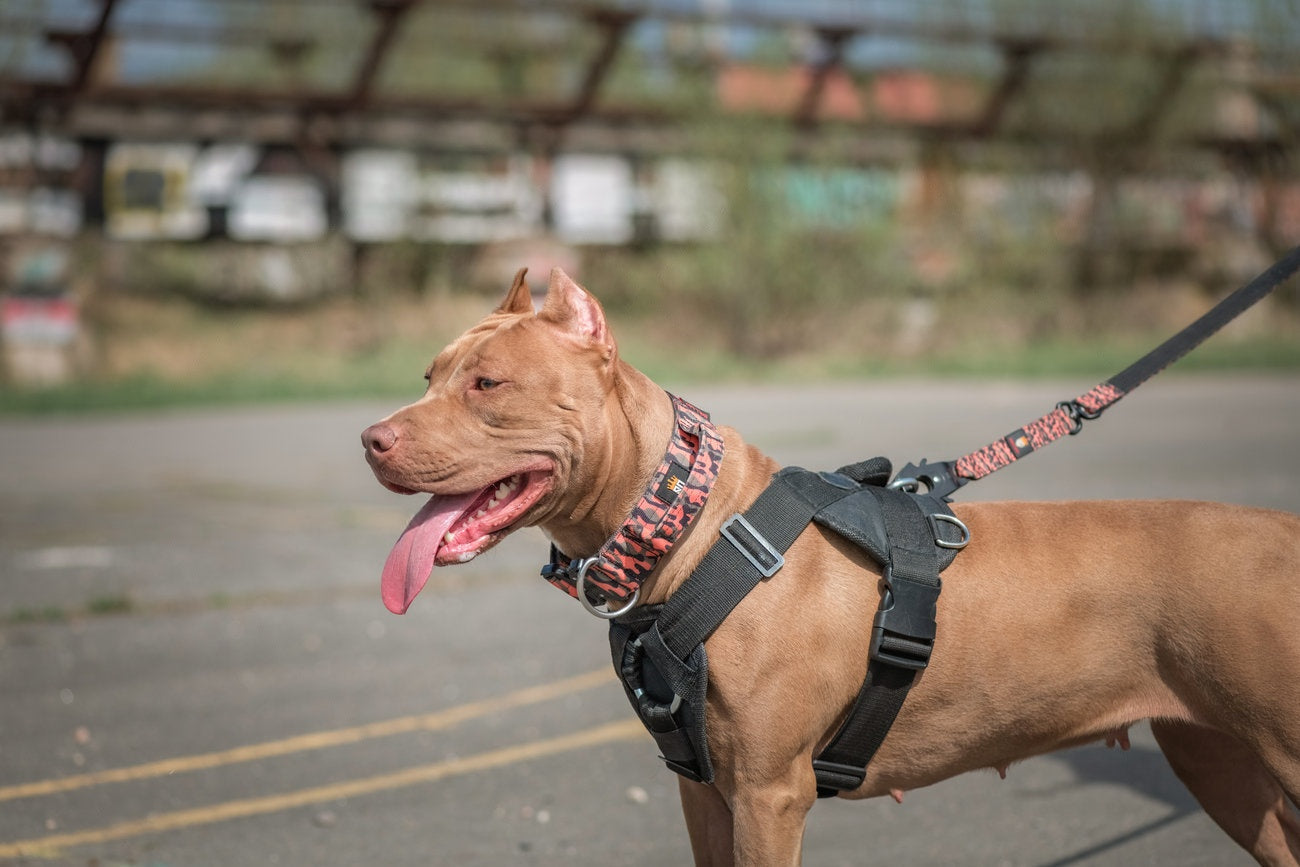
 If walks feel more like a tug-of-war than quality time, you’re not alone! Many dog parents struggle with leash pulling, but the good news is—with patience and the right techniques, your pup can learn to walk calmly by your side. Here’s how to get started!
Excitement: They want to explore everything—fast!
Lack of training: Walking nicely isn't natural—it must be taught.
Reinforcement: If pulling gets them where they want to go, they'll keep doing it.
This means your dog walks beside you with a slack leash—not pulling or dragging you forward.
A front-clip harness can reduce pulling without hurting your dog.
Use a standard leash (4–6 ft). Avoid retractable leashes—they encourage pulling.
Practice in your yard or hallway before heading to busy streets.
Let your dog get used to the leash and walking beside you.
Use treats or praise when your dog walks calmly beside you.
Mark good moments with a cue like “Yes!” or a clicker.
If your dog pulls: stop walking.
Wait until the leash is loose again, then move forward.
Repeat until they learn pulling = no progress.
If your dog starts pulling, change direction quickly (without yanking).
This keeps your dog focused on you, not what’s ahead.
Don’t yank or jerk the leash—it can hurt your dog and create fear.
Don’t let pulling lead to reward (e.g., reaching a tree, dog, or smell).
Don’t expect perfection overnight—this takes practice and consistency.
Keep sessions short: 5–10 minutes is plenty to start.
Be consistent: Everyone who walks your dog should follow the same rules.
Make it fun: Bring high-value treats, use an upbeat voice, and celebrate progress!
Clicker training (marking the moment they walk nicely)
Treat pouch for quick rewards
High-reward treats (think tiny bits of cheese, chicken, or liver)
With time and patience, leash training transforms walk-time from stressful to enjoyable. Remember: every step in the right direction is worth celebrating!


Leave a comment